
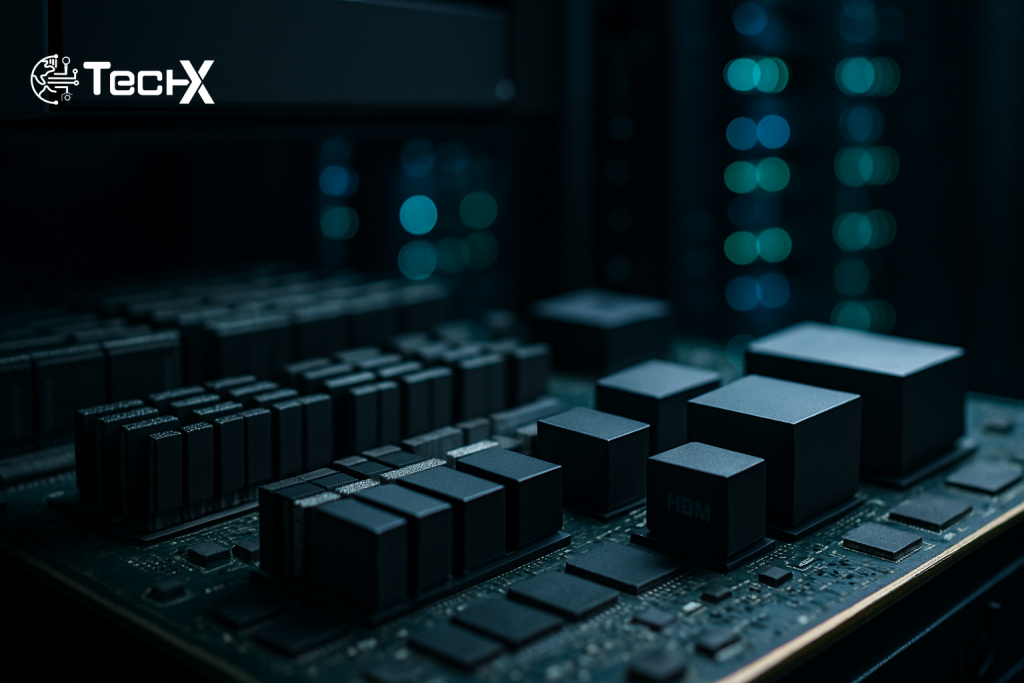
The AI memory shortage gripping the global tech industry in 2026 is not a passing supply blip. It is a structural crisis that is squeezing companies from Apple and Microsoft down to the smallest Android phone maker, and its effects are showing up in Pakistani shops right now.
What is the AI memory shortage and why does it matter?
DRAM (Dynamic Random Access Memory) is the working memory inside almost every digital device you use: your phone, your laptop, your router, your car. HBM, or High-Bandwidth Memory, is a specialised type of DRAM built for AI accelerators and high-performance computing. It delivers far more data throughput than conventional DDR5 and is essential for training and running large AI models.
This is not just a cyclical shortage driven by a mismatch in supply and demand, but a potentially permanent, strategic reallocation of the world’s silicon wafer capacity. For decades, smartphones and PCs drove memory production. Today, that dynamic has inverted. The voracious demand for HBM by hyperscalers such as Microsoft, Google, Meta, and Amazon has forced the three biggest memory manufacturers, Samsung Electronics, SK Hynix, and Micron Technology, to pivot their limited cleanroom space toward higher-margin enterprise-grade components.


The zero-sum game eating your next phone upgrade
Every wafer allocated to an HBM stack for an Nvidia GPU is a wafer denied to the LPDDR5X module of a mid-range smartphone or the SSD of a consumer laptop. The numbers are stark. The demand for HBM will increase 70% year-on-year in 2026 alone, according to Taipei-based consultancy TrendForce. HBM now takes up 23% of total DRAM wafer output in 2026, up from 19% last year.
TrendForce estimates that AI workloads will absorb about 20 percent of global DRAM wafer capacity in 2026, and the math is unforgiving: one gigabyte of HBM consumes roughly the wafer area of four gigabytes of standard DRAM. So every gigabyte sold to a data centre is four gigabytes that never reach a consumer device.
Samsung, SK Hynix, and Micron have all been aggressively converting production lines to HBM, as the revenue per wafer for HBM is estimated to be three to five times higher than conventional DDR5. This economic incentive means that even as total memory production capacity grows, the share available for consumer devices continues to shrink.
Apple, Microsoft, and the warning signs from the top
A growing procession of tech industry leaders, including Elon Musk and Tim Cook, are warning about a global crisis in the making. A shortage of memory chips is beginning to hammer profits, derail corporate plans, and inflate price tags on everything from laptops and smartphones to automobiles and data centres. Since the start of 2026, Apple and a dozen other major corporations have signalled that the shortage of DRAM will constrain production. Tim Cook warned it will compress iPhone margins.
Big tech companies are on track to spend a staggering $650 billion in 2026 on AI infrastructure, up about 80% from last year’s record. So even if chipmakers ramp up production, potential relief from the shortage is more than a year away, if not longer.
SK Hynix and Micron Technology have reported their entire 2026 HBM production is sold out, signalling a prolonged memory crisis. Google DeepMind’s Demis Hassabis called it a “choke point” for the industry. Meanwhile, Samsung has struggled to meet Nvidia’s qualification standards for its 12-layer HBM chips due to yield and performance issues, tightening the bottleneck further.
The price spike hitting consumers everywhere
IDC describes the situation as a “tsunami-like shock originating in the memory supply chain, with ripple effects spreading across the entire consumer electronics industry.” IDC estimates the average selling price of smartphones will rise 14% this year to an all-time high of $523, while manufacturers will no longer be able to make phones that cost less than $100.
IDC also predicts that 2026 smartphone sales will see a record decline of 12.9% to 1.12 billion units, the lowest level in more than a decade.
PC buyers face the same pain. PC vendors are signalling broad price increases as cost pressures intensify into the second half of 2026. Lenovo, Dell, HP, Acer, and ASUS have warned clients of tougher conditions ahead, confirming 15 to 20% hikes and contract resets as an industry-wide response.
The irony is that the same AI revolution driving memory prices higher is also increasing the memory requirements for consumer devices. AI features in laptops and smartphones, such as on-device assistants, real-time translation, and image generation, require more RAM and faster memory than previous generations. This means that even as memory becomes more expensive, the amount needed per device is increasing, creating a double squeeze on manufacturers and consumers alike.
What this means for Pakistan
Pakistani consumers are already feeling the AI memory shortage in their pockets. Pakistan will be affected by this global shortage. The country depends heavily on imported smartphones, laptops, and IT hardware. As global memory prices rise, local device prices are likely to increase as well.
The mobile and laptop prices surge in Pakistan in 2026 reflects a combination of global supply pressure and local economic constraints. Consumers across Pakistan now face record-high prices for basic and premium devices, with entry-level laptops crossing PKR 99,000 and flagship smartphones exceeding PKR 400,000.
Memory prices are expected to rise by up to 60% this year. The manufacturing cost for entry-level smartphones has jumped by 25%. Companies are simply passing these increased costs directly to buyers. Local assemblers face the same wall. Local assemblers rely completely on imported memory chips. Since these chips are currently 20% to 30% more expensive globally, local phone prices are climbing.
For Pakistani businesses buying IT hardware, laptops, or servers, the advice from global procurement experts is to plan ahead and lock in contracts early, because spot prices are rising fast and supply windows are narrow. If you want to understand how AI is also reshaping Pakistan’s broader digital economy, the Anthropic IPO story gives useful context on just how much capital is flooding into AI right now, the same capital crowding out the memory your next laptop needs.
Will it get better soon?
New memory fabs are being built, but not fast enough. The new US-based fabs will not be ready in time to alleviate the 2026 crisis. While the US CHIPS Act has spurred major investments, such as Micron’s projects in New York and Idaho and SK Hynix’s plant in Indiana, these facilities are not slated for mass production until 2028 or later.
IDC has described the current shift as a “permanent reallocation” of manufacturing capacity toward AI. As long as AI data centre demand continues to grow, and all projections indicate it will, manufacturers will have a strong economic incentive to prioritise high-margin HBM over lower-margin consumer products. While new capacity will eventually ease the acute shortage, the structural price floor has likely moved permanently higher.
For now, the AI memory shortage means one clear thing for ordinary buyers in Pakistan and everywhere else: the next phone or laptop upgrade will cost more than the last one, and the one after that may cost even more. The memory inside your device has become the most contested resource in the global technology economy, and AI is winning that contest. You can learn more about how memory technology works and its role in computing at Wikipedia’s DRAM page or explore the official IDC research portal for the latest market data.
Frequently Asked Questions
What is causing the AI memory shortage in 2026?
The AI memory shortage is driven by big tech companies like Microsoft, Google, Meta, and Amazon spending billions on AI data centres. These data centres need huge amounts of HBM, a special high-speed memory. The world’s three main memory makers, Samsung, SK Hynix, and Micron, have shifted most of their factory space to making HBM because it earns them three to five times more profit than regular memory chips. This leaves far less supply for phones, laptops, and other everyday devices.
How does the memory shortage affect iPhone and Android prices?
Apple’s Tim Cook has warned the shortage will squeeze iPhone profit margins. For Android, the impact is worse. Manufacturers whose business is mainly in the low end of the market are likely to suffer significantly. The business models of vendors such as Realme, Xiaomi, Oppo, Vivo, and Honor are based on thin margins, leaving them little room to absorb rising memory costs without raising prices or cutting specs.
Why are laptop and phone prices rising in Pakistan specifically?
Pakistan imports almost all its consumer electronics. When global DRAM and NAND prices rise, Pakistani importers pay more and pass that cost on to buyers. On top of that, an 18% sales tax on smartphones and a ban on used phone imports remove cheaper options from the market. Interest rates set by the State Bank of Pakistan also make it expensive for importers to finance inventory, which leads to higher retail pricing.
When will memory prices go back to normal?
With the memory market controlled by only a few global players, price volatility is likely to continue. Experts warn that high memory prices may become the new normal. Speculative buying and sustained AI demand are keeping the market tight. Meaningful relief is unlikely before late 2026, and many analysts now say the shortage will stretch into 2027.