
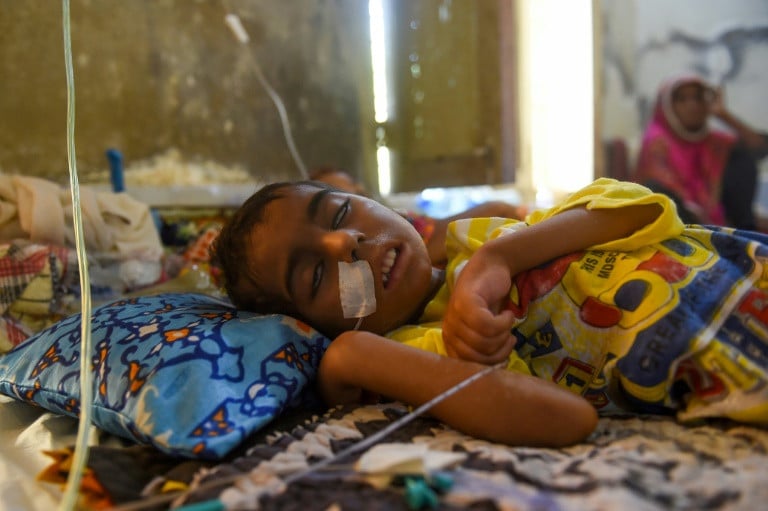
On Friday, it became clear that the number of cases of drug-resistant (XDR) typhoid in the city was increasing, especially among youngsters. Health experts warned of a significant increase in the coming days. Numerous cases of it are currently being reported regularly at various healthcare facilities in the city.
Hundreds of thousands of people in Hyderabad, Karachi, and other regions were afflicted by an XDR typhoid outbreak in Sindh in 2019 and 2020. Typhoid affected around 200k people in Sindh and Karachi in 2022.
The experts warned that when the temperature rises in the next weeks, this trend could accelerate.
“Over the past two months, we have seen an increasing trend in typhoid cases at the National Institute of Child Health (NICH). According to Dr Liaquat Ali Halo, deputy director of NICH, “most patients reporting with prolonged fever, diarrhoea, vomiting, and abdominal pain are being diagnosed with [dangerous] extensively-drug resistant (XDR) typhoid.”
He claims that children are more susceptible to the disease because of their weak immune systems and that the infection is transferred by contaminated water or food. They also eat food from street vendors who “have no concept of health and hygiene,” he added.
He claimed that the therapy for drug-resistant typhoid is expensive and uncomfortable. It’s an injection therapy given three times daily for 14 days, with the dosage determined by the patient’s weight. Combating vaccination reluctance requires concerted effort.
Vaccine can help fight against typhoid
The experts also stressed the importance of coordinated government initiatives to reduce vaccine scepticism and expand access to routine immunisations.
The instances of typhoid fever, drug-resistant typhoid, and extensively-drug-resistant typhoid are on the rise, according to Dr. Wasim Jamalvi of the Pakistan Paediatric Association (PPA), albeit their total number is lower than that reported in 2019 and 2020. This is the case since many parents choose to vaccinate their children following the outbreak.
Although the typhoid vaccine is provided at no cost as part of the standard vaccination campaign, “unfortunately, the numbers of children getting vaccinated against the life-threatening infection is still too low,” he said.
He noted that vaccine scepticism was a significant impediment to expanding the use of routine immunisations.
The treatment is highly efficient (against typhoid in all its forms) and cost-free. However, he added, “we don’t see encouraging trends for routine immunisation coverage,” highlighting the importance of sustained efforts to dispel vaccine fallacies.
There are many contributing factors
Dr. Abdul Ghafoor Shoro, a senior general practitioner who represents the Pakistan Medical Association, was asked about the incidence of typhoid in the adult population and replied the data weren’t concerning at the moment. However, as the weather warms up in the following weeks, more people—especially the impoverished workers working in the streets—are expected to be harmed.
According to him, the government’s refusal to provide its people with clean drinking water is the greatest danger in this regard.
The impoverished, in particular, have little choice but to put their lives in danger. They can’t afford to boil the polluted water that comes through government lines.
“Sky-rocketing inflation has left the poor with barely any money to spend on transport that he needs to reach a hospital for getting vaccinated against typhoid,” he said, noting that the vaccination was only available at tertiary care facilities.
He proposed coordinating anti-polio efforts with existing immunisation programmes.
Experts say there are numerous approaches to tackling the threat posed by all typhoid strains. Long-term solutions include expanding access to safe drinking water and enhancing healthcare infrastructure. However, it has been suggested that typhoid vaccinations be required for all children under the age of 15 as an emergency measure to combat the disease.
Furthermore, results imply that decisive actions must be done to prevent the widespread abuse of antibiotics in the country to contain the XDR strain.
To read our article about “2 Government healthcare facilities now use safe AI system” click here.